Self-Trust Practices for 2027: Listening to Your Body's Wisdom
Most mindset work is bull$h*t. I spent years in programs that treated mindset as a strategy, only to find myself more disconnected than ever. They taught me to perform, not to listen. Self-trust doesn’t come from another framework or a 10-step plan; it’s about returning to the wisdom of your own body. Effective self-trust practices for 2027 aren't about adding more to your plate. They are about creating space to hear your own intuition, regulating your nervous system so it feels safe to change, and learning to let your body be your compass.
Why Most Self-Help Falls Short of Building Trust
For years, the wellness industry sold us a version of self-improvement that was all about optimization. We were told to hustle harder, think more positively, and follow the prescribed morning routines of wildly successful people. The implied message was clear: you are a problem to be solved, a project to be managed. This approach, however, often backfires, creating a deeper sense of inadequacy. According to a study in 2023, the mental wellness industry is valued at $131 billion, yet many people report feeling more anxious and disconnected than ever.
This happens because most self-help skips the body entirely. It’s head-work. It operates on the assumption that if you can just change your thoughts, your feelings and actions will follow. I see this constantly with the high-achieving women who come to Asha's Place. They've read the books, done the therapy, and intellectually "know" what to do, but they’re still exhausted and making decisions based on external expectations.
You haven't lost yourself; you've just buried yourself under everyone else's version of who you should be. The work isn't to build a new you, but to uncover the one who has been there all along.
True self-trust is a somatic experience. It’s a felt sense of safety and knowing in your bones. It’s not about forcing positive thoughts; it’s about learning to sit with the discomfort of uncertainty and still know you’ll be okay. It's about understanding that your nervous system has a language of its own, and learning to listen to its whispers before they become screams.
The Performance of "Self-Care"
The term "self-care" itself has been co-opted. It has become another thing to be good at, another item on the to-do list. A bubble bath or a face mask is lovely, but it’s not a substitute for the real work of setting boundaries, having difficult conversations, or resting when your body is screaming for a break. These are the actions that build a foundation of trust. They are signals to your inner self that you are on its side.
So many of my clients arrive feeling like they’ve failed at self-care. They’ve bought the products and booked the appointments, but the underlying feeling of being disconnected remains. That's because commercialized self-care often asks us to consume our way to well-being, rather than connect with ourselves. The real self trust practices for 2027 are about subtraction, not addition. They’re about taking things off the plate, not piling more on.
Mindset vs. Body Wisdom
I’ve learned, both in my own life and through my work, that the body holds a wisdom that the mind can’t access. When I was a tenured professor and attorney, I had every external marker of success. But I felt like I was drowning. My mind told me I should be happy, but my body was screaming that something was deeply wrong. It wasn’t until I learned to listen to that physical-emotional signal that I could begin to make changes that were truly aligned.
This is why practices like somatic bodywork, breathwork, and even gentle movement are so crucial. They bypass the analytical mind and speak directly to the nervous system. A 2021 study in the journal Frontiers in Psychology highlighted how interoception, the sense of the internal state of the body, is fundamental to emotional regulation and decision-making. When you practice tuning into your body, you are strengthening your capacity for self-trust.
The Foundation: Nervous System Regulation
Before you can trust yourself, your body has to feel safe. Not just logically safe, but biologically safe. This is the work of nervous system regulation. For many of us, especially women of color who have had to be twice as good to get half as far, our nervous systems are chronically stuck in a state of high alert. We live in a low-grade fight-or-flight mode, and from that state, it’s impossible to access intuition or make clear, grounded decisions.
The work we do at Asha’s Place is grounded in this principle. Every offering, from healing practices to yoga, is a doorway into understanding and soothing your own nervous system. It’s not about "calming down"; it’s about building capacity. It’s about widening your window of tolerance so that you can handle life’s stressors without being thrown completely off balance.
What is a Regulated Nervous System?
A regulated nervous system is a flexible one. It can ramp up to meet a challenge (the sympathetic response) and then efficiently return to a state of rest and digest (the parasympathetic response). When we’re dysregulated, we get stuck in one of these states. We might feel perpetually anxious, wired, and unable to rest, or we might feel shut down, numb, and disconnected.
Neuroscientist Dr. Stephen Porges developed the Polyvagal Theory, which gives us a beautiful map for understanding this. He identifies three main states: the ventral vagal state (safe and social), the sympathetic state (fight or flight), and the dorsal vagal state (shutdown or freeze). The goal isn’t to live only in the "safe and social" zone; it’s to be able to move fluidly between the states as the situation demands. Building self-trust means learning what your unique state-shifts feel like and what helps you come back to a place of internal safety.
Simple Practices to Build Somatic Safety
You don’t need an hour a day to start regulating your nervous system. The most effective practices are small, consistent, and woven into the fabric of your life.
- Orienting: This is as simple as it sounds. Pause and let your eyes scan the room you’re in. Name five things you can see. Name four things you can feel (the chair beneath you, your feet on the floor). Name three things you can hear. This simple act tells the primal part of your brain that you are physically safe in your current environment.
- Sighing: A long, audible sigh is one of the body’s fastest ways to reset the nervous system. The long exhale stimulates the vagus nerve, which is the main highway of the parasympathetic nervous system. Inhale through your nose, and then let out a slow, heavy sigh through your mouth. Do this three times.
- Self-Touch: Placing a hand on your heart or your belly can be incredibly grounding. The gentle pressure and warmth are a form of self-soothing that communicates safety to your body. It’s a non-verbal way of saying, “I’m here. I’ve got you.” Research has consistently shown that gentle, affective touch can reduce stress and increase feelings of well-being.
The Role of Community in Regulation
We are social creatures. Our nervous systems are designed to co-regulate with others. This means that simply being in the presence of a calm, safe person can help our own system settle. This is why being in a room where you don’t have to explain your exhaustion is so powerful. It’s why the community gatherings we host are just as important as the classes.
Finding a community where you feel seen, held, and understood is a radical act of self-trust. It’s choosing to believe that you are worthy of belonging, exactly as you are. This sense of safety in a group allows for a deeper level of individual healing to occur.
The Impact of Self-Trust on Well-being
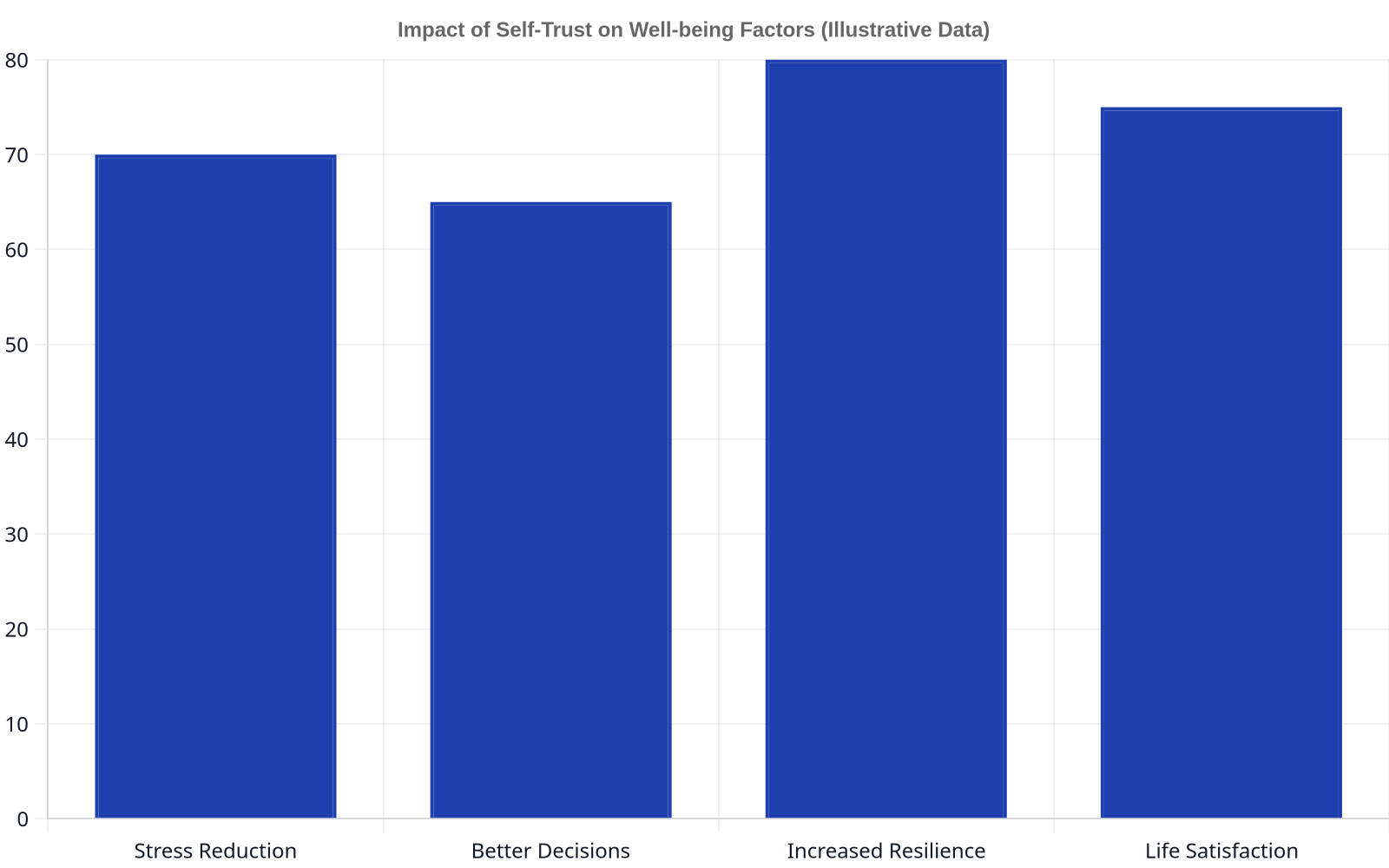
Cultivating self-trust isn’t a passive, internal process. It has tangible, measurable effects on every aspect of your life. When you trust yourself, you make decisions with more ease and confidence. You stop outsourcing your power to others. You set boundaries not out of anger, but out of self-respect. Your relationships become more authentic because you’re no longer performing a version of yourself you think others want to see.
This isn’t just a nice idea; it’s backed by psychological research. And Social Psychology Found a strong correlation between authenticity (acting in accord with one’s true self) and higher levels of well-being, self-esteem, and life satisfaction.
From Indecision to Intuitive Action
How many hours have you lost agonizing over a decision, polling friends, making pro-con lists, and still feeling uncertain? This is a classic sign of a disconnect from self-trust. You’re looking for the “right” answer externally because you don’t trust the answer that’s already inside you.
As you build self-trust, you learn to recognize the subtle cues of your intuition. For some, it’s a feeling of expansion or openness in the chest. For others, it’s a quiet, clear "yes" that drops into their awareness. Learning your body’s unique language for “yes” and “no” is a superpower. You start taking intuitive action, which feels less like a leap of faith and more like a simple next step.
Boundary Setting as a Practice of Devotion
Many of us, especially women, are taught that setting boundaries is selfish or mean. We’re conditioned to be accommodating, to put others’ needs before our own. Reclaiming the right to say "no" is one of the most profound self trust practices there is. A boundary isn’t a wall you put up to punish someone; it’s a line you draw to honor yourself. It’s you telling you: "Your peace matters. Your energy is precious. You are worthy of protection."
Start small. Say no to a small request that you don’t have the capacity for. End a conversation when you feel your energy draining. Protect an hour of your weekend for unstructured rest. Each time you enforce a boundary, you cast a vote for yourself. You are reinforcing the message to your entire system that you are a safe and trustworthy guardian of your own well-being.
Integrating Self-Trust Practices into Daily Life
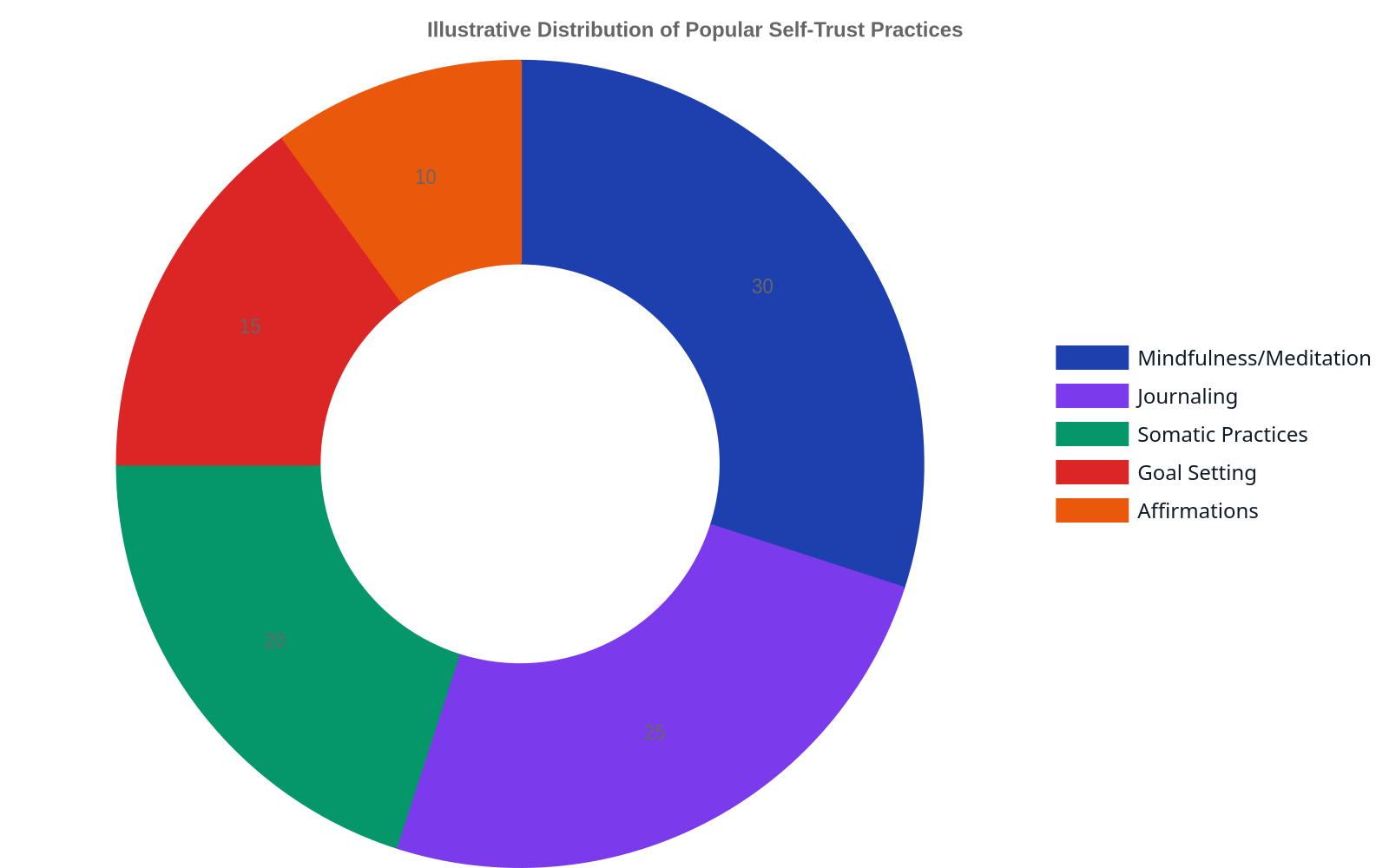
Building self-trust is a practice, not a destination. It’s something you return to, day after day, choice after choice. It’s not about a massive life overhaul. It’s about integrating small, intentional acts into the life you already have. This is how you slowly remove the layers of conditioning and expectation to come home to yourself.
At our studio, we emphasize a steady rhythm of healing practices, because consistency is what rewires the brain and the body. It’s not about one big, transformative workshop. It’s about the quiet, daily commitment to showing up for yourself.
| Practice Type | Daily Action (5-10 mins) | Weekly Action (30-60 mins) | Deeper Dive (Occasional) |
|---|---|---|---|
| Body Awareness | Body scan meditation | Gentle yoga or movement class | Somatic bodywork session |
| Nervous System | 3 conscious sighs | Unstructured rest/nap | Solo Retreats or a day of silence |
| Intuition | Journal on a gut feeling | Pull a tarot/oracle card | Work with a guide in Private Sessions |
| Boundaries | Say "no" to one small thing | Schedule "do not disturb" time | Have a necessary, difficult conversation |
| Self-Compassion | Hand-on-heart, gentle words | Write a list of accomplishments | Write yourself a loving letter |
The Power of the Small "Yes"
We often think that trusting ourselves is about making huge, life-altering decisions correctly. But the foundation is built on much smaller choices. It’s choosing to drink a glass of water when you feel thirsty. It’s choosing to stretch for five minutes when your back is stiff. It’s choosing to step away from your computer when you feel overwhelmed.
Each of these small acts of listening and responding to your body’s needs is a deposit in your self-trust account. You are proving to yourself, in a tangible way, that you can be counted on. When the time comes to make a bigger decision, you’ll have a deep well of embodied experience to draw from. You’ll know what your "yes" feels like because you’ve been practicing it all along.
Creating Rituals of Return
Life will inevitably pull you away from yourself. Stress, demands, and crises are part of being human. The practice isn’t to never get disconnected; it’s to get better and faster at returning. This is where creating personal rituals can be a powerful anchor.
Your ritual doesn’t have to be elaborate. It could be lighting a candle and journaling for three minutes before you start your workday. It could be a 10-minute walk without your phone at lunchtime. It could be putting on a specific song and dancing in your living room when you feel stuck.
The point of the ritual is that it’s a pre-decided doorway back to yourself. You don’t have to invent a solution in a moment of stress. You just have to follow the path of your ritual, which will lead you back to your body and your breath. It’s a compassionate structure you build for your future self.
The Future of Self-Trust: Trends for 2027
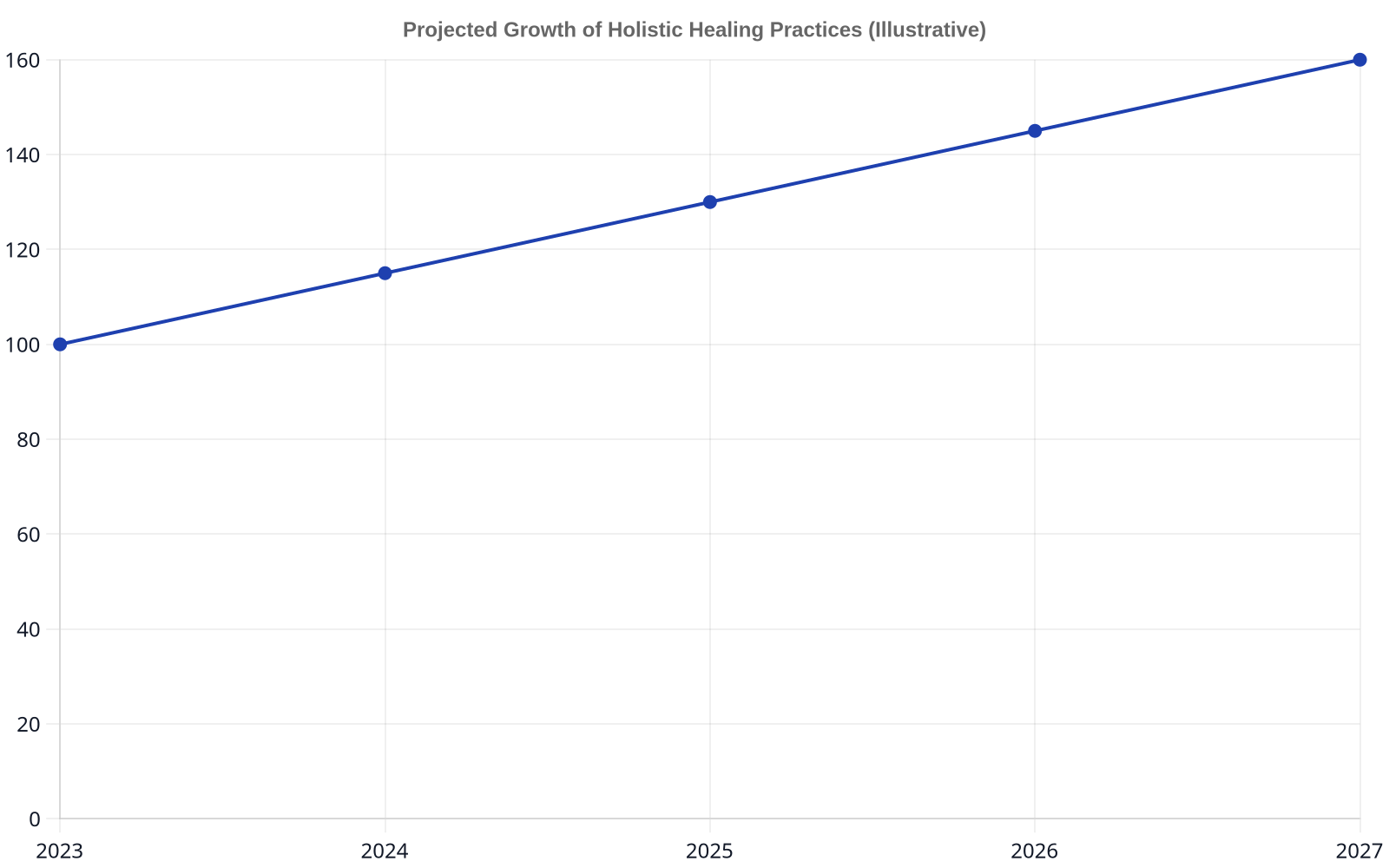
As we look toward 2027, the conversation around well-being is shifting. We are moving away from the hustle-adjacent language of "optimizing" and "upgrading" ourselves. Instead, there is a collective yearning for practices that are gentle, sustainable, and deeply personal. We are recognizing that you cannot heal in the same environment that made you sick. The future of well-being is about creating new environments, both internal and external, that foster safety, connection, and belonging.
This is a core part of our mission. We aren’t just a studio; we are a spiritual school teaching people to work with their own energy. The self trust practices for 2027 are less about individual achievement and more about co-regulation, ancestral wisdom, and remembering that we are part of something larger than ourselves.
Ancestral Wisdom as a Modern Guide
There is a growing recognition that many "new" wellness trends are simply repackaged ancient traditions. From breathwork to herbalism to sound healing, these are practices that our ancestors have used for millennia to stay connected to themselves, to the earth, and to spirit. Turning to these older, wiser ways is a powerful act of self-trust. It’s an acknowledgment that we don’t have to reinvent the wheel. The wisdom we need is already in our lineage.
This might look like researching the healing traditions of your own ancestors. It might mean learning about plant medicine from an elder. It might mean simply spending more time in nature, remembering that you are part of its rhythms. It’s about connecting to something older and wiser than the pressure of modern life.
Trauma-Informed and Somatic Approaches
The future of any effective practice is trauma-informed. This means recognizing that many of us are carrying the weight of past experiences, both personal and collective, in our nervous systems. A trauma-informed approach doesn’t try to force a release or push for a cathartic experience. Instead, it prioritizes creating safety and giving the individual agency over their own experience. It’s slow, it’s patient, and it’s deeply respectful of the body’s wisdom.
Somatic therapies, which focus on the mind-body connection, are becoming more mainstream for this reason. Practices like Somatic Experiencing, Reiki, and various forms of bodywork help to gently process and release trapped stress and trauma from the body, creating more capacity for joy, presence, and self-trust. This is a significant shift from purely talk-based therapies and is central to the self trust practices for 2027 that will have a lasting impact.
Healing isn't something done to you. It's a condition created for you to reconnect with your own intuition and self-trust. No one can give you the answers, but someone can hold a light while you find your own.
FAQ
How do I start building self-trust if I feel completely disconnected?
Start with the body, and start small. Don't try to tackle the big existential questions right away. Instead, focus on a simple, physical act of listening. When you feel thirsty, drink water immediately. When you feel tired, give yourself permission to sit down for five minutes. The practice is about closing the gap between what your body needs and how you respond. These tiny, consistent acts of self-attunement are the building blocks of trust.
Can self-trust be learned, or is it an innate trait?
Self-trust is absolutely a skill that can be learned and cultivated at any age. While some people may have had upbringings that nurtured it more than others, it is not a fixed trait. It is a practice. Like learning any new language, it requires patience, consistency, and a willingness to be a beginner. Every time you make a choice that honors your own needs or boundaries, you are strengthening the neural pathways of self-trust.
What if my intuition tells me to do something scary?
This is a crucial distinction. It’s important to learn the difference between the feeling of intuition and the feeling of a trauma response. Intuition often feels calm, clear, and expansive, even if the action it’s guiding you toward is scary. A trauma response, on the other hand, often feels contractive, urgent, and charged with fear or panic. Regulating your nervous system is the key to being able to tell the difference. When you are in a more regulated state, the voice of your intuition becomes much clearer.
How long does it take to rebuild self-trust?
There is no timeline. Healing and rebuilding trust are non-linear. It's a spiral, not a straight line. There will be moments of profound connection and clarity, and there will be moments where you feel lost again. The goal isn't to arrive at a final destination of "perfect self-trust." The goal is to become more skilled at navigating the process, to be more compassionate with yourself when you falter, and to get quicker at finding your way back to your own center. It’s a lifelong practice of returning.
Can I build self-trust on my own?
While the internal work is yours to do, you don't have to do it in isolation. In fact, co-regulation with safe others is one of the most powerful ways to accelerate the process. Being in community with people who see you and honor your process can provide the safety and support needed for deep healing. This can be through community gatherings, working with a trusted guide in Private Sessions, or joining a group that shares your values.
If something in you is nodding as you read this, trust that. That feeling is the beginning. It’s a signal from your own inner wisdom. The work isn’t about becoming someone new; it’s about remembering the person you’ve always been. It’s about coming home to yourself.