Bodywork for Emotional Tension: Finding Release & Returning Home
That tension in your shoulders, the knot in your stomach, the ache in your lower back, it isn’t just physical. It’s the weight of unspoken words, unmet needs, and the pressure of being twice as good to get half as far. Using bodywork to release emotional tension is a practice of intentionally using physical touch and movement to access and let go of stored emotional stress. This process recognizes that your body holds memories and feelings that your mind can’t always articulate, creating a doorway to release what no longer serves you.
At my healing studio in Lisbon, Portugal, I see brilliant women who have done everything right, yet feel exhausted and disconnected. They’ve read the books and done the therapy, but the tension remains. That’s because talking about it isn't always enough. You have to get into the body. This is where modalities like somatic bodywork, breathwork, and intuitive energy work come in. They aren't about fixing you, because you’re not broken. They are about helping you remember the wisdom of your body and creating the conditions for you to come home to yourself.
What Is Bodywork for Emotional Release?
Bodywork to release emotional tension is a category of therapies that use touch, movement, and breath to help your nervous system process and discharge stored stress. It’s based on the understanding that trauma, grief, anxiety, and even daily frustrations can get trapped in our muscle tissue and fascia, leading to chronic pain, stiffness, and a feeling of being stuck. This isn't just a metaphor; it's physiology. The American Psychological Association notes that long-term stress can significantly impact the musculoskeletal system.
Unlike a standard massage focused solely on muscle knots, this work is intentionally focused on the mind-body connection. A practitioner creates a safe space for you to pay attention to your physical sensations without judgment. As they apply gentle pressure or guide you through specific movements, they might ask what you’re noticing. This simple act of bringing awareness to a tense area can be the first step in unlocking the emotion held there. The goal isn’t to force a release, but to allow it. Sometimes it comes as tears, a deep sigh, a sudden memory, or just a profound sense of lightness.
For example, during a Private Breathwork Session, a client might start with a specific intention, like releasing the feeling of being responsible for everyone. As they breathe, I might guide them to notice the tightness in their jaw. As they breathe into that space, the physical sensation can connect to the emotional pattern of holding things in. The release happens as the nervous system shifts from a state of fight-or-flight to one of rest-and-digest, signaling to the body that it’s finally safe to let go.
Benefits of Somatic Bodywork for Emotional Release
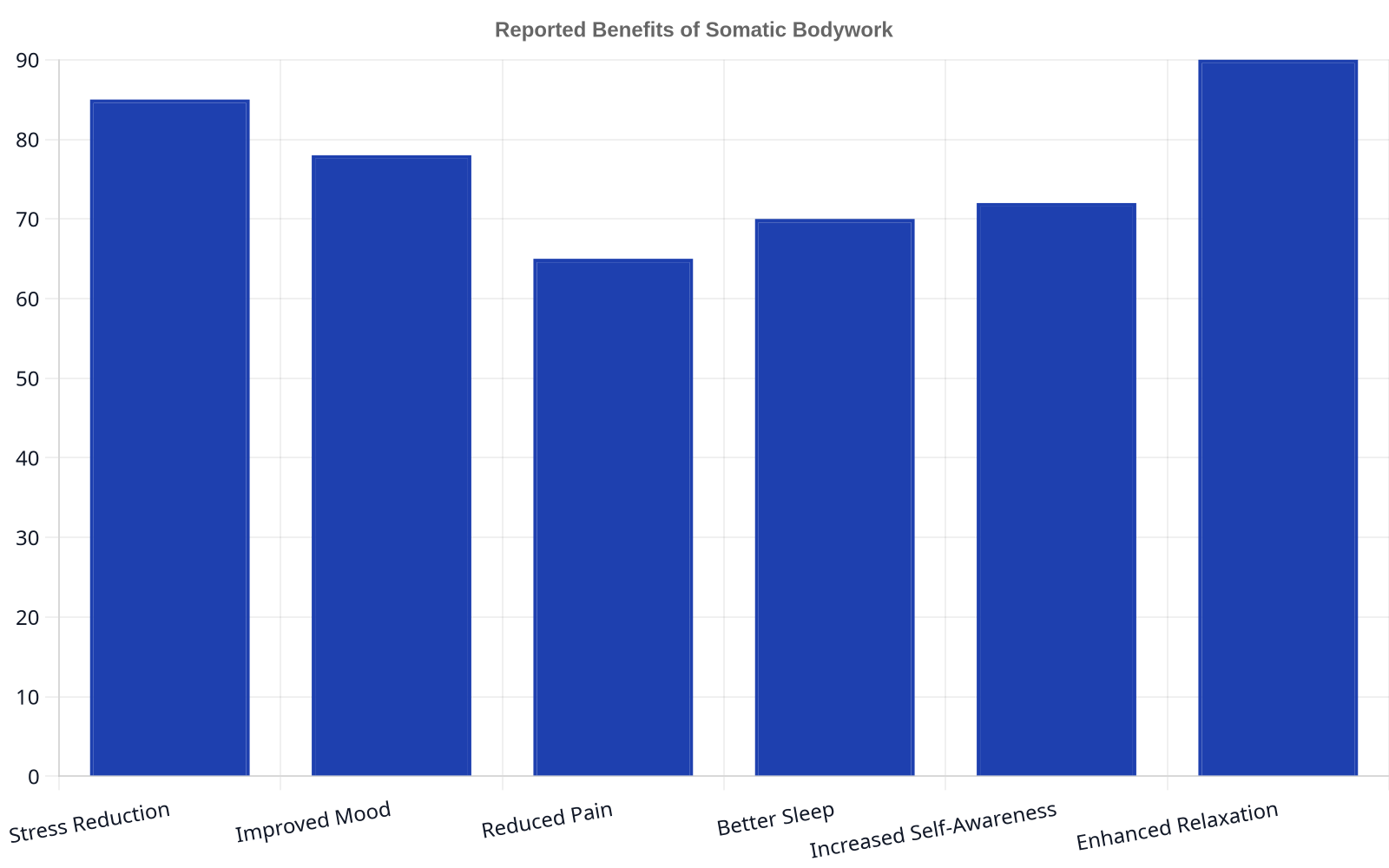
One of the primary benefits is a regulated nervous system. So many of us, especially high-achieving women, live in a state of low-grade, chronic activation. Somatic practices help your body remember how to access its natural state of calm. Research from institutions like the Trauma Center emphasizes the importance of body-based therapies in healing trauma by working directly with these physiological responses.
The remedy isn't more discipline; it's learning to trust yourself again and to let your body be your compass, not your enemy.
This work can also lead to a deeper sense of self-awareness and intuition. When you learn to listen to the subtle signals of your body, you get better at recognizing your own needs and setting boundaries. It's not just about feeling better for an hour on a massage table; it’s about rebuilding self-trust. You learn that the knot in your stomach before a meeting is valuable information, a signal from your body’s wisdom. At Asha’s Place, we facilitate this through various healing practices and movement classes designed to create a gentle, unhurried space for this reconnection.

What This Practice Is Not
It's crucial to understand what this work is not. First, it is not a quick fix or an attempt to bypass genuine emotional processing. Some people may feel a dramatic release in a single session, but for most, it's a gradual unfolding. You are learning a new language: the language of your own body. This takes time and consistency.
Second, it is not a replacement for psychotherapy. Bodywork is a powerful complement to talk therapy, not a substitute. A therapist can help you cognitively understand your patterns, while a bodywork practitioner can help you release them on a cellular level. In fact, many modern therapeutic approaches are integrating somatic techniques because they recognize that cognition alone is often not enough to resolve deep-seated emotional issues.
Finally, it is not about forcing catharsis. You should never feel pressured to have a big emotional experience. The goal is safety and regulation. A skilled practitioner knows how to guide you to the edge of your comfort zone without pushing you over it. A true release is an allowing, not a doing. It happens when your system feels held and secure enough to let its guard down.
When Does Releasing Emotional Tension Through Bodywork Matter Most?
You don’t need to be in a full-blown crisis to benefit, but this work is particularly supportive during times of major life transition. Breakups, career changes, grief, or periods of burnout are all moments when your body is trying to process an immense amount of information and stress. As I learned myself when I left my career as a tenured professor and attorney, the identity shifts left me feeling like I was swimming underwater. Bodywork was a lifeline that helped me process the spiritual and mental exhaustion that success had masked.
Your ancestors didn't sacrifice for you to be exhausted. They sacrificed so that you would be free.
This practice also matters for anyone who feels disconnected from their body. If you live mostly in your head, intellectualizing your feelings and ignoring physical discomfort, somatic work can be a powerful doorway back to yourself. It’s for the women who are tired of performing, tired of carrying weight that was never theirs to carry, and ready to feel whole again. As a study in the journal Frontiers in Human Neuroscience suggests, interoceptive awareness, or the sense of the internal state of the body, is fundamental to our sense of self and emotional well-being.
Ultimately, this work is for anyone who is ready to stop treating their body like an inconvenient vehicle for their brain and start listening to its wisdom. It's for those ready to remember that healing isn't something someone else does to you; it's a condition you create for yourself to reconnect with your own power.
FAQ
What does emotional release feel like?
It varies for everyone. It can be a physical sensation like shaking, warmth, or tingling. It might manifest as spontaneous crying, laughter, or a deep sigh. Many people report feeling lighter, calmer, and more grounded afterward. For others, it's a subtle shift in perspective or the quiet dissolving of a long-held tension they didn't even realize was there.
How often should I do bodywork for emotional release?
This depends on your needs and what you're working through. During a period of high stress or transition, you might benefit from weekly or bi-weekly sessions. For general maintenance and self-awareness, once a month may be sufficient. The most important thing is consistency and listening to what your body is asking for.
Can I do this on my own?
Yes, there are many self-guided practices. Conscious breathing, stretching with awareness (like in yin yoga), shaking or dancing, and self-massage are all ways to connect with your body and release tension. However, working with a trained practitioner can provide a level of safety, guidance, and depth that can be difficult to achieve alone, especially when processing significant trauma or emotional weight.
What's the difference between this and a deep tissue massage?
A deep tissue massage primarily focuses on manipulating fascia and muscle tissue to relieve physical pain and adhesions. Bodywork for emotional release uses touch as a tool to access the nervous system and connect with stored emotions. While it may involve similar techniques, the practitioner's intention and focus are on the mind-body connection and creating a safe container for emotional processing, not just muscular relief.
Is it normal to feel tired after a session?
Yes, it is very normal to feel tired after a session. Your body and nervous system have done significant processing work, even if you were lying still. It's a good sign that your system is shifting out of a stress response and into a state of rest and integration. It's always best to give yourself a quiet, unhurried schedule after a session to allow the benefits to settle.