Mindfulness Trends 2026: From Self-Care to Mental Hygiene
Mindfulness Isn't What You Think: The Real Trends for 2026
Most people get mindfulness wrong. They see it as another task on an endless to-do list, another form of self-improvement to feel guilty about not doing perfectly. They think it’s about emptying their minds, sitting in lotus position for an hour, or achieving a state of permanent calm. But true mindfulness isn’t about adding more pressure. The most important mindfulness trends in 2026 are moving away from rigid performance and toward gentle, practical integration into daily life, treating it as essential mental hygiene rather than a luxury practice.

This shift is about recognizing that you aren't broken. It's about creating small, unhurried moments to reconnect with your body’s wisdom. It’s about managing the constant pull of modern life not by fighting it, but by building a more stable, grounded inner world. This is where the real power lies: not in escaping reality, but in becoming more present and fully human within it. And this is the work we explore at Asha's Place Lisbon, helping people find their own doorways back to themselves.
The “Tired and Wired” Epidemic: Mindfulness as an Antidote
So many of the women I work with describe themselves as "tired and wired." They’ve done everything right according to society’s rulebook: they’ve built careers, raised families, and achieved success. Yet, they feel perpetually exhausted while their minds race with anxiety, unable to switch off. This state isn’t a personal failing; it’s a logical response to a culture that demands constant productivity and connectivity. The pressure to perform, coupled with the endless stream of information from our devices, keeps our nervous systems in a state of high alert. 27% of adults reported being so stressed they couldn’t function.
Moving from “Always On” to Intentional Rest
The cultural expectation to be "always on" is a fast track to burnout. We check emails before bed, scroll through social media first thing in the morning, and feel a constant, low-grade hum of urgency. Mindfulness offers a direct counter-practice. It’s not about finding more hours in the day to meditate; it’s about intentionally creating moments of non-doing. This could be as simple as a three-minute breathwork exercise between meetings, or noticing the sensation of warm water on your hands while washing dishes. These micro-practices disrupt the cycle of chronic stress, signaling to the nervous system that it’s safe to stand down. They are small acts of returning to your body, your anchor in the present moment.
Somatic Practices for a Digital Age
Because we live so much of our lives online and in our heads, we’ve become disconnected from our physical selves. Somatic practices, which focus on the felt sense of the body, are becoming a critical mindfulness trend. This includes practices like somatic bodywork, gentle yoga, and even dance, all of which we incorporate into our work at Asha's Place. These aren't just "exercise." They are intentional forms of movement designed to release stored tension and trauma from the body. A client once described the experience as “remembering I had a body below my neck.” This is the essence of somatic work: it bypasses the analytical mind and works directly with the body’s stored experiences, offering a profound path to regulation and release.
Redefining Productivity as Presence
For too long, productivity has been measured by output alone. The emerging trend is a shift toward defining productivity by the quality of our presence and focus. A mind fractured by a dozen competing demands cannot produce deep, meaningful work. Mindfulness trains the focus muscle, allowing you to be more present with the task at hand. In Psychology, mindfulness training can significantly improve attentional functions. Instead of multitasking in a state of scattered attention, you learn to single-task with intention. The result isn't just better work; it’s a more sustainable and less draining way of working.
From Self-Care to Mental Hygiene: A Necessary Reframe
Let’s be honest: the term "self-care" has been co-opted and commercialized to the point of becoming almost meaningless. It’s often presented as another thing to buy: a face mask, a bubble bath, a weekend getaway. While these things can be nice, they are often just temporary balms for a deeper wound. They don’t address the underlying stress and disconnection that so many of us feel. The shift in 2026 is from viewing mindfulness as an indulgent form of self-care to seeing it as a non-negotiable form of mental hygiene, just like brushing your teeth.
The Limits of Consumption-Based Wellness
Buying a product can provide a momentary lift, but it doesn’t build internal resilience. The wellness industry often sells us quick fixes that treat the symptoms of burnout without addressing the cause. True well-being isn’t something you can purchase; it’s a capacity you build within yourself. This is why the practice of mindfulness is so powerful. It doesn't require a subscription or a fancy accessory. It requires only your attention and a willingness to show up for yourself, even for just a few minutes a day. It’s about building an internal resource that you can draw on, no matter what external circumstances you face.
Mindfulness as a Daily Practice, Not a Grand Gesture
The idea of mental hygiene reframes mindfulness as a series of small, consistent actions rather than a grand, occasional gesture. You don't wait until you have a cavity to brush your teeth. Similarly, you don’t need to wait until you’re completely burned out to practice mindfulness. By integrating small moments of presence throughout your day, you are consistently tending to your mental and emotional state. This might look like taking five deep, conscious breaths before answering a difficult email, or doing a short body scan before sleep to release the day’s tension. These aren't glamorous actions, but they are the foundation of a regulated and resilient nervous system.
The remedy isn't more discipline; it's learning to trust yourself again and to let your body be your compass, not your enemy. Your ancestors didn't sacrifice for you to be exhausted. They sacrificed so that you would be free.
Distinguishing Rest from Escape
Another critical distinction is between true rest and simple escape. Binge-watching a TV series or scrolling through social media can feel like rest because it provides a distraction from our thoughts and feelings. But this is often a numbing activity, not a restorative one. True rest, as facilitated by mindfulness, involves turning toward your experience with gentle awareness. It’s about allowing your nervous system to fully enter a state of "rest and digest." Practices like Yoga Nidra (yogic sleep) or a quiet walk in nature without your phone are forms of active rest that can be far more replenishing than hours of passive entertainment. This is a core part of the healing practices we offer, helping people learn the language of their own nervous system.
The Growing Embrace of Mindfulness: Market Size and Projections
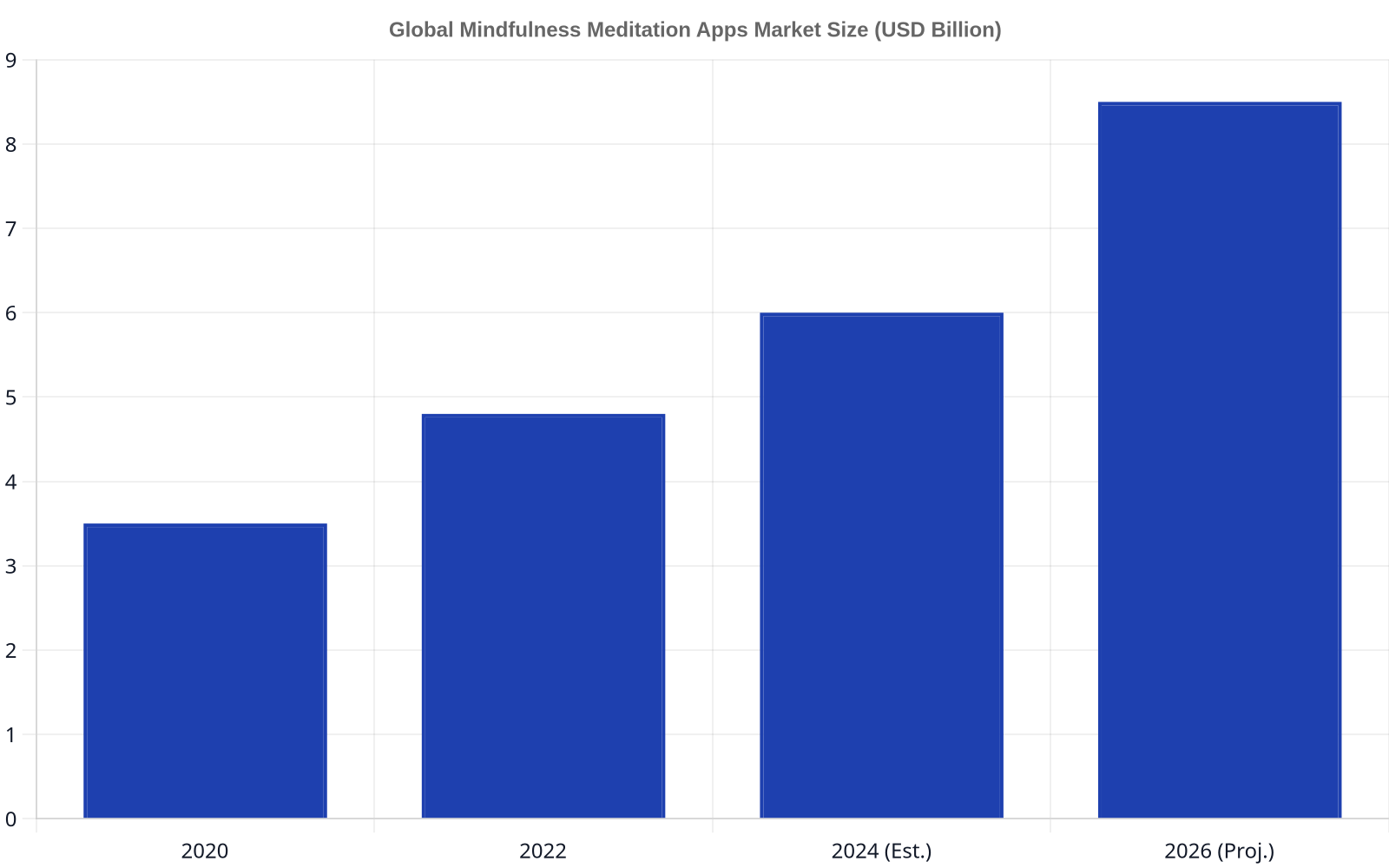
The conversation around mindfulness isn't just happening in healing circles; it's being reflected in global economic trends. The wellness market has exploded, and mindfulness is a significant part of that growth. What was once considered a niche or "alternative" practice is now a mainstream industry, with a growing body of scientific research backing its efficacy. This economic momentum ensures that mindfulness tools and resources will become even more accessible in the coming years.
The Billion-Dollar App Market
The most visible sign of this trend is the proliferation of mindfulness and meditation apps. Companies like Calm And Headspace Have become household names, valued at billions of dollars. The global mindfulness meditation apps market size was valued at USD 533.2 million in 2022 and is projected to grow to USD 6,712.9 million by 2032, explosive growth demonstrates a massive societal shift and a collective hunger for tools that can help manage the stress of modern life. These apps have made introductory mindfulness practices accessible to millions, serving as a first step for many on their path to deeper self-awareness.
AI and Personalized Mindfulness
Looking ahead, one of the most significant mindfulness trends for 2026 involves the integration of artificial intelligence. AI has the potential to create highly personalized mindfulness experiences. Imagine an app that can detect your stress levels through biometric data from your smartwatch and suggest a specific breathwork exercise in real-time. Or an AI-powered journal that helps you identify patterns in your thoughts and emotions. While the human element of guidance and community will always be irreplaceable, AI can serve as a powerful supplementary tool, offering tailored support 24/7. It can act as a "first responder" for your mental state, providing immediate, accessible interventions.
Corporate Wellness Catches On
Corporations are also increasingly recognizing that employee well-being is not just a perk, but a strategic imperative. Burnout, absenteeism, and low engagement are expensive problems. As a result, many companies are integrating mindfulness and meditation programs into their corporate wellness offerings. A 2021found that 60% of large employers offer some form of mindfulness training. This is a double-edged sword: while it increases access, it's crucial that these programs are implemented authentically and not as another corporate-speak checklist item. The goal should be genuine support for employees' mental health, not just a tool to extract more productivity.
Demographics of Mindfulness: Who is Practicing?
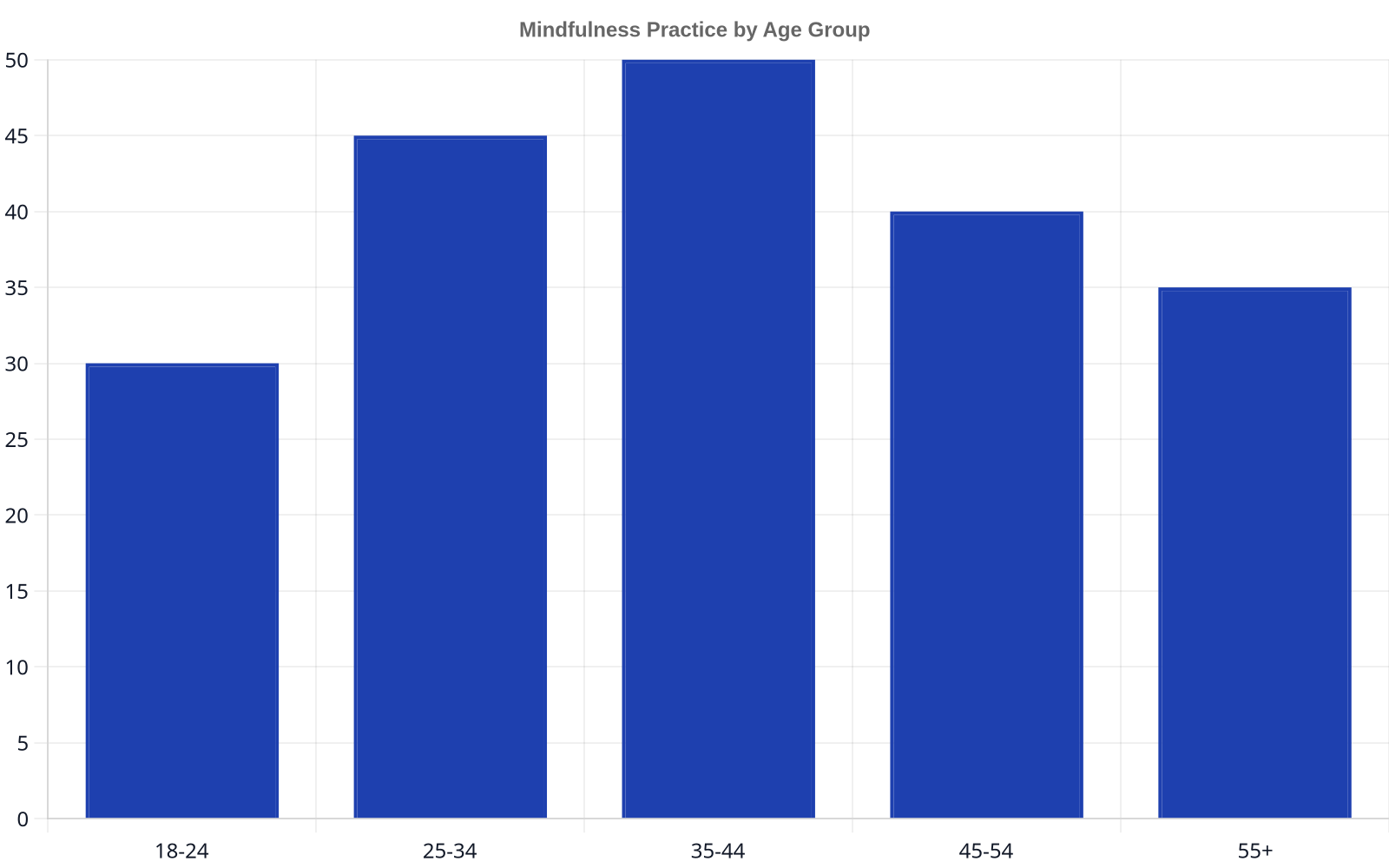
As mindfulness becomes more mainstream, the demographics of who is practicing are broadening significantly. It is no longer confined to a specific age group, gender, or cultural background. This diversification is a positive sign, indicating a more inclusive and universal understanding of the benefits of these practices. From schools to hospitals to corporate boardrooms, mindfulness is finding a foothold across all sectors of society.
Mindfulness in Education and Healthcare
One of the most promising trends is the integration of mindfulness into education and healthcare systems. Schools are beginning to teach children mindfulness techniques to help with emotional regulation, focus, and empathy. Programs that incorporate social-emotional learning (SEL) have been shown to improve academic outcomes and reduce behavioral problems. In healthcare, doctors are increasingly "prescribing" mindfulness for conditions ranging from chronic pain to anxiety and depression. The UK’s National Health Service, for example, has approved Mindfulness-Based Cognitive Therapy (MBCT) as a primary treatment for recurrent depression. This medical validation is helping to destigmatize mindfulness and position it as a legitimate, evidence-based intervention.

A Shift in Global vs. Regional Trends
While mindfulness has its roots in ancient Eastern traditions, its modern expression varies significantly across the globe. In Western countries like the US, the focus is often on stress reduction and performance enhancement, with a strong emphasis on scientific validation. In many parts of Asia, mindfulness is more deeply integrated into the cultural and spiritual fabric of daily life. Here in Lisbon, we see a beautiful blend. There's a growing community of people from all over the world, including many from the US and UK, who are seeking a more soulful, less hustle-oriented way of life. They are drawn to the slower pace and the emphasis on community and connection, which creates a fertile ground for deeper healing practices.
Beyond the Buzzword: Mindfulness for Impulse Control
In a world of boundless temptation, from the next notification on our phones to the promise of instant gratification through online shopping, the ability to manage our impulses is a modern superpower. Mindfulness is, at its core, a training in impulse control. The practice involves noticing an impulse as it arises, whether it's a thought, a feeling, or a physical urge, and creating a space of awareness around it before you react. This is the space where you reclaim your power of choice. Instead of being driven by unconscious habits and external triggers, you learn to respond with intention. This isn't about suppression; it’s about awareness. By observing your impulses without judgment, you loosen their grip on you. This is a foundational skill for breaking addictive patterns and aligning your actions with your deeper values.
Practical Applications: Weaving Mindfulness into Your Life
The most powerful mindfulness trends for 2026 are those that emphasize practical, real-world application. The goal is not to become a perfect meditator, but to become a more present and aware human being. This means finding practices that fit your life, not contorting your life to fit a rigid idea of what mindfulness "should" be. At Asha's Place, we believe in offering many different doorways into this work, from movement to breath to stillness.
A Comparison of Mindfulness Modalities
There are many paths to mindfulness. Finding the right one for you often involves some experimentation. Here’s a look at some popular modalities:
| Modality | Best For | What it Involves |
|---|---|---|
| Formal Meditation | Building focus & discipline | Sitting in a quiet space for a set period, focusing on an anchor like the breath. |
| Breathwork | Quick nervous system regulation | Using specific breathing patterns to shift your emotional and physiological state. |
| Mindful Movement | Reconnecting with the body | Practices like yoga, tai chi, or walking, where the focus is on the physical sensations of movement. |
| Somatic Bodywork | Releasing stored trauma & tension | Guided practices or hands-on work to access and process the body's stored experiences. |
| Sound Healing | Deep relaxation & meditative states | Using instruments like singing bowls or gongs to create vibrations that calm the nervous system. |
Creating Your Own Mindfulness Ritual
A ritual is simply an action infused with intention. You can turn almost any daily activity into a mindfulness practice. Here’s a simple process to create your own:
- Choose a "Trigger" Activity: Pick something you already do every day, like making your morning coffee or tea.
- Engage Your Senses: As you perform the activity, bring your full attention to it. Notice the smell of the coffee grounds, the sound of the water boiling, the warmth of the mug in your hands.
- Notice Your Breath: While you wait for the coffee to brew, take three slow, deep breaths. Feel the air entering and leaving your body.
- Set an Intention: As you take your first sip, silently set a simple intention for your day. It could be something like, "Today, I will be gentle with myself."
- Repeat Consistently: The power of a ritual comes from its repetition. By linking your mindfulness practice to an existing habit, you make it easier to sustain.
Healing isn't about adding more to your already overcrowded life; it's about creating space. It's about regulating your nervous system so your body feels safe enough to change and connecting to something older and wiser than the pressure you've been under your whole life.
Whether you are a local here in Lisbon or joining us from afar, perhaps on a solo retreat to reconnect with yourself, the principles are the same. The work is about coming home to your own body, your own wisdom, and your own power. It is an unhurried, gentle, and deeply personal process of remembering who you are beneath all the noise.
FAQ
What are the biggest mindfulness trends for 2026?
The biggest mindfulness trends for 2026 involve a shift away from rigid, performance-based practices toward more integrated, practical applications. Key trends include treating mindfulness as daily mental hygiene, the use of AI and apps for personalized support, a greater focus on somatic (body-based) practices to combat digital fatigue, and the expansion of mindfulness into corporate wellness, healthcare, and education.
How is mindfulness different from self-care?
While both aim to improve well-being, "self-care" is often framed as an external activity or product you consume (like a spa day or a bath bomb) to get temporary relief. Mindfulness, on the other hand, is an internal practice of building awareness and resilience. It's a form of mental hygiene that develops your capacity to manage stress and connect with yourself, rather than just treating the symptoms.
Can technology and AI really help with mindfulness?
Yes, technology can be a powerful doorway into mindfulness, especially for beginners. Apps like Calm and Headspace have made guided meditations accessible to millions. Looking ahead, AI can offer personalized practices based on real-time biometric data, helping you regulate your nervous system at the moment you need it most. However, technology should be seen as a tool to support, not replace, the essential human elements of community and embodied practice.
What are somatic practices?
Somatic practices are mindfulness techniques that focus on the internal felt sense of the body. Instead of just observing thoughts, you bring awareness to physical sensations, tensions, and emotions as they manifest in your body. Examples include somatic bodywork, mindful movement, and certain types of breathwork. They are particularly effective for releasing stored stress and trauma that the conscious mind may not be able to access.
How can I start a mindfulness practice if I have no time?
Start small. The goal isn’t to add another hour-long task to your day. Instead, find micro-moments to be present. Try a "one-minute meditation" where you simply focus on your breath for 60 seconds. Or, practice mindful dishwashing, paying full attention to the sensations of the water and soap. Linking a short mindfulness exercise to an existing habit, like your morning coffee, is a great way to build consistency.
If you feel called to explore these practices in a held and supportive space, I invite you to see what we’re creating at Asha's Place. This work isn’t about becoming someone new. It’s about creating the conditions for you to remember the wisdom you already hold and finally come home to yourself.