Is Self-Trust Coaching the Antidote for Burnout in Women?
Self-trust coaching for women is a guided process of returning to your body’s innate wisdom to make clear, aligned decisions. It’s not about adding rules or becoming a better version of yourself; it’s about removing the layers of expectation and conditioning that obscure who you already are. This work helps you distinguish the voice of your intuition from the noise of fear, so you can stop second-guessing and start living from a place of deep inner knowing and authority.
For years, I followed the path I was told was “right.” I became a tenured college professor and a practicing attorney, collecting accolades but feeling increasingly disconnected from myself. I learned that success doesn't prevent burnout and that achievement can feel hollow when you’ve lost the thread of what you truly want. Self-trust coaching is the work I needed to save my own life, spiritually and mentally. It’s a process centered on intuitive listening and nervous system regulation, which is why I now specialize in helping other high-achieving Black women find their way back to themselves.
How Self-Trust Coaching Works
Unlike most mindset programs that can keep you spinning in your head, self-trust coaching is an embodied practice. It operates on the principle that your body holds a wisdom your mind can't access alone. The goal is to reconnect you with that physical intelligence, so it becomes your most reliable compass.
This process involves several core components:
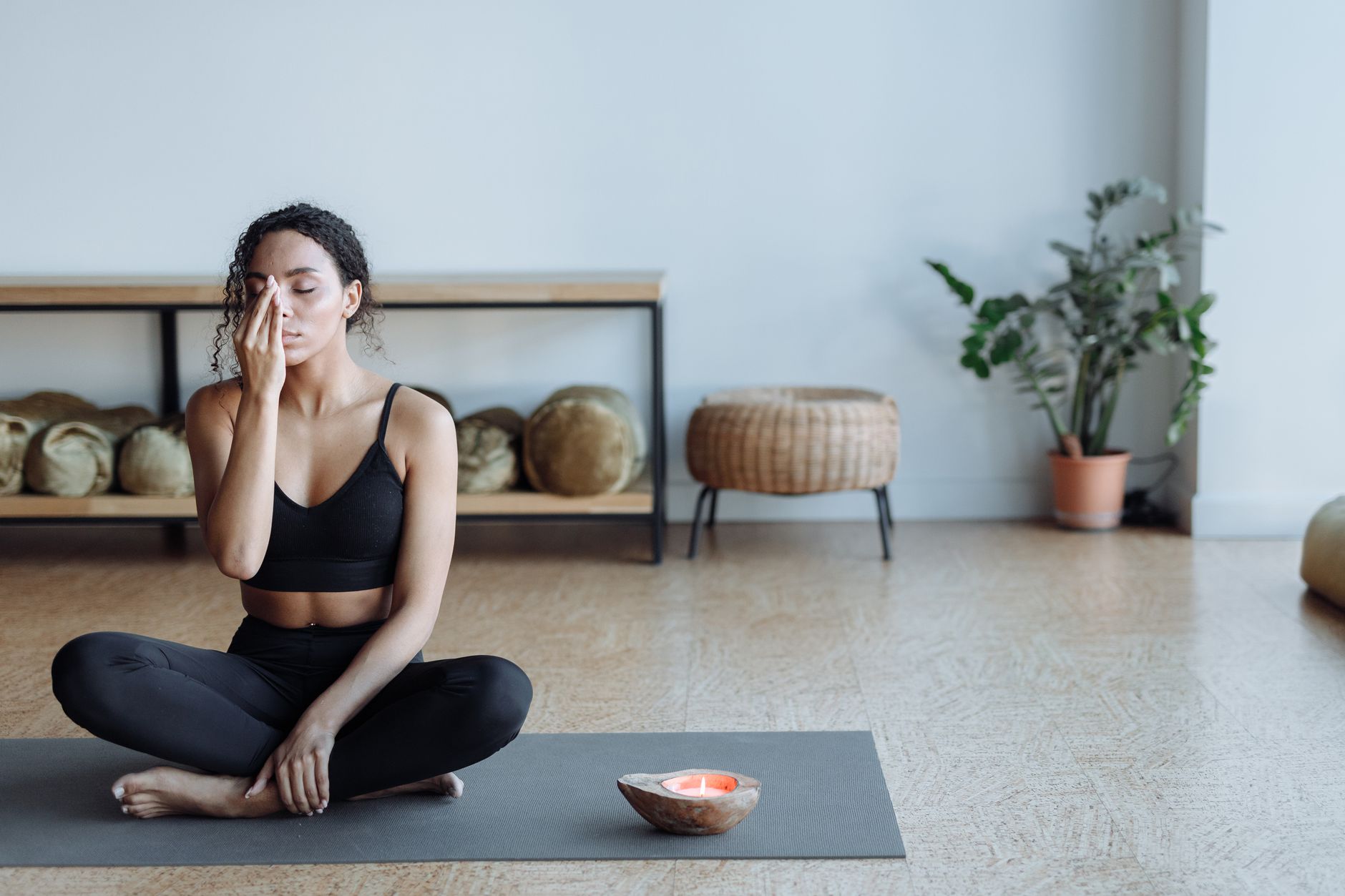
- Somatic Awareness: The work begins with the body. We don't talk our way out of burnout or disconnection; we feel our way through. Through gentle breathwork, movement, and somatic exercises, you learn how to listen to the subtle signals your body is constantly sending. This is about learning how your own energy works so you can read it and trust it. The ability to feel safe in your own skin is the foundation for trusting yourself.
- Discerning Intuition from Fear: A common question is, “How do I know if it’s my intuition or just fear?” Intuition often feels calm, clear, and expansive, even if the message is difficult. Fear usually feels contracting, frantic, and noisy. Coaching gives you practical tools to map these different sensations in your body, so you no longer have to guess. This physical feedback is more reliable than any pro-con list, a concept supported by research into the mind-body connection.
- Setting Aligned Boundaries: Boundaries aren't walls you put up to keep people out; they are the lines you draw to hold your own energy and protect your peace. In coaching, we identify where your energy is leaking (in your work, relationships, and commitments) and practice creating boundaries that feel like an act of self-honor, not aggression.
The whole point is this: your body already knows what's right for you. Coaching just helps you learn how to listen to it again.
Through consistent, gentle practice, the goal is not to have me tell you the answers, but to create the conditions for you to hear your own. Many women can benefit from learning some simple daily self-trust practices to begin this work.

What Self-Trust Coaching Is Not
Understanding what this work isn't is as important as understanding what it is. The modern wellness world is full of noise, and self-trust coaching is often confused with other modalities.
First, it is not traditional confidence coaching. Confidence is often about external validation and performance: speaking up in a meeting, asking for a raise, or appearing poised under pressure. While those are worthy outcomes, they don't require self-trust. Self-trust is internal. It’s the quiet, unshakable belief in your own capacity to navigate life, make good decisions for yourself, and handle whatever comes your way. Confidence is about how you show up for others; self-trust is about how you show up for yourself, even when no one is watching.
Second, this is not another productivity tool or life hack designed to help you do more. In fact, it’s the opposite. It’s an invitation to do less and be more. For so many high-achieving women, the solution to feeling overwhelmed has been to get more organized or find a new framework. This work starts by creating space, slowing down, and unlearning the addiction to constant motion. It's about remembering how to find rest and self-discovery through movement, not just efficiency.
Finally, this work doesn’t ask you to abandon your intellect. As a former lawyer, I have a deep respect for analytical thought. The aim isn't to replace your mind with your gut; it’s to build a bridge between the two. Your intellect is a powerful tool, but it's only one part of your intelligence. Self-trust comes from integrating the wisdom of your body with the logic of your mind, allowing you to make whole, fully integrated decisions.

Who Needs This Work the Most?
Self-trust coaching is for the woman who has done everything “right” and still feels like something is wrong. She has the degrees, the titles, the successful career, and the picture-perfect life, but inside she’s exhausted, disconnected, and running on fumes. She’s the person everyone else turns to for advice, yet she chronically second-guesses her own choices.
This work is particularly potent for women navigating:
- Imposter Syndrome: Despite external evidence of competence, there's a persistent internal belief that you're a fraud. This is a common experience for women in demanding fields, from law to academia. Self-trust is the antidote, as it shifts your source of validation from external to internal.
- The Confidence Gap: Research continues to highlight how societal conditioning creates a “confidence gap” where women are less self-assured than their male counterparts. A focus on rebuilding trust in one's own judgment is crucial for closing this gap personally and professionally.
The women I work with haven't lost themselves; they've just buried themselves under everyone else's version of who they should be.
This work recognizes that for many women, especially Black women, the path to success has required suppressing intuition in favor of a rigid structure for survival. My practice is a space that honors this reality, creating a container for worthiness work that allows you to come home to yourself without having to blow up your life to get there. It’s a different approach to wellness for Black women, one centered on belonging and reconnection.
Self-trust is not a destination you arrive at, but a relationship you cultivate with yourself over time. It is the gentle, steady practice of returning to your own wisdom, again and again. If you are ready to stop performing and start living, you can explore the different doorways back to yourself through the courses and retreats we offer.
Further reading
- Ensuring That Women Thrive at Work - AACSB
- Women's leadership in Tanzania's education system: What is holding ...